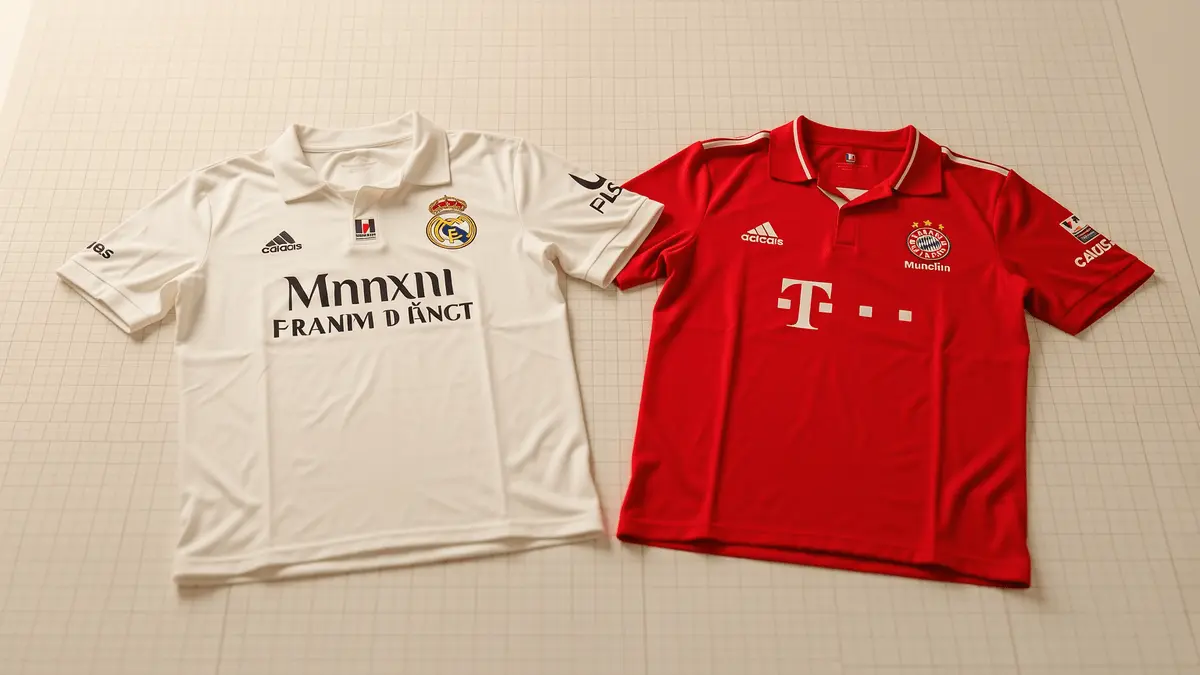
Real Madrid are exploring a deal structure for Bayern Munich winger Michael Olise (23) that would combine a cash offer of between €100m and €130m with the inclusion of either Aurélien Tchouaméni or Eduardo Camavinga, according to Defensa Central. The proposal would not be framed as a direct player swap but as two separate operations, with the total package approaching €200m in either scenario.
As previously covered on Football Espana, Florentino Pérez has been willing to commit over €200m to land Olise, and the latest reported structure represents an attempt to make that ambition workable in practice rather than simply throwing a single enormous cash bid at a club that has already said no.
How the proposed deal structure works
The two variants of the plan hinge on which midfielder Los Blancos include. If Tchouaméni is the player offered, Madrid would value him at around €100m and pair that with a €100m cash payment for Olise – a combined package of roughly €200m. If Camavinga is included instead, Madrid would place his value at approximately €70m and increase the cash portion to €130m, arriving at a broadly equivalent total.
Structuring the deal as two separate operations, rather than one swap, is significant: it allows both clubs to book transfer income and expenditure independently, which has implications for how each accounts for the movement under their respective financial rules. It also gives Bayern the option to decline the midfielder without that decision collapsing the Olise negotiation entirely – though in practice, the two transactions are clearly linked.
Bayern Munich’s position remains the central obstacle
Bayern’s public stance has been unambiguous and consistent. Club president Herbert Hainer stated directly that if Pérez wanted to make an offer, “he can save himself the trouble,” adding that Bayern are not a selling club. Board member Karl-Heinz Rummenigge described Olise as “unsellable” – language that goes beyond standard negotiating posture and signals a genuine institutional reluctance rather than an inflated asking price waiting to be met.
Real Madrid issued their own denial earlier in the summer, stating they had made no direct or indirect contact with Olise or his representatives. That denial sits awkwardly against the escalating specificity of the reported offers, and the gap between the two clubs’ public positions is one reason why the structure of any eventual approach matters as much as the figure attached to it.
Tchouaméni and Camavinga as bargaining chips
The logic behind including one of the two French midfielders rests on Bayern’s own reported interest in both players. Defensa Central note that the German champions have explored signing Tchouaméni and Camavinga in the past, meaning Madrid are not manufacturing interest from nothing – they are attempting to convert a known Bayern preference into negotiating leverage. Whether that interest remains live enough to shift Bayern’s stated position on Olise is another question entirely.
The choice of player also carries significant internal implications for Madrid. Tchouaméni at €100m is the more impactful departure: he is 24 and established as a starter in the deepest midfield role. Pérez’s broader transfer agenda for the summer was always premised on reshaping the attack rather than thinning the midfield, which makes the Camavinga route – cheaper in cash terms but less disruptive to the squad structure – the more conservative variant of the two.
What this means for Real Madrid’s summer
The internal framing of Olise’s pursuit as a Galáctico-calibre signing is understandable given what he produced last season: 25 goals and 27 assists for Bayern, numbers that place him among the most productive wide players in European football. Madrid’s interest has been building since at least the start of June, and the willingness to engineer a deal structure this complex suggests the club views the pursuit as serious rather than speculative.
The risk is that Bayern simply do not engage, leaving Madrid having publicly signalled the departure of a first-team midfielder to no end. Prior reported bids in the €160m–€165m range were never acknowledged by Bayern, let alone countered, which suggests the club’s resistance is structural rather than a function of price.
What next for Real Madrid and Michael Olise
The next meaningful development will be whether Madrid move from reported internal deliberation to a formal approach, and whether the package format – two separate operations rather than a single bid – is enough to open a conversation that Bayern’s hierarchy has so far closed before it started. Olise’s own position matters too: current reporting out of Germany does not suggest a player seeking an exit, which means any deal requires Bayern to be moved by the fee alone. Until Madrid lodge something on paper, this remains a saga defined by creative financial engineering on one side and institutional resistance on the other.


Live Comments
Welcome to our Live Comments section, where new comments will appear automatically
Add a Comment