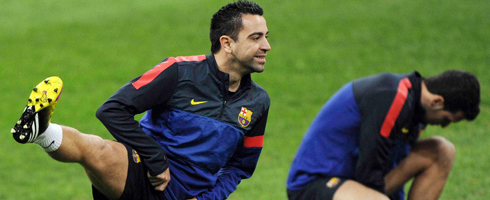
Xavi Hernandez has reflected on valuing Barcelona’s medical team, their development in recent years and on the belief doping doesn’t exist in the sport.
The club’s medical services were just last week granted FIFA Medical Centre of Excellence status, to become the 34th centre overall and the first at a club to be recognised as such.
Barca’s veteran midfielder spoke with the game’s governing body this week to mark the news.
“For us the medical service is fundamental, above all for the confidence it gives us, and from knowing we have the best professionals here, whether physios or doctors, who can treat any kind of problem,” Xavi told FIFA’s official website.
“The majority have been here for many years, especially the Catalan staff who work with the first team. Consequently, they go beyond the call of duty, are very attentive and always put the players first.
“When you’ve a bad injury, what you really want is to be able to trust those around you. It’s knowing that you’re in the hands of the best physios and doctors and being able to trust them.
“If you have a problem, you have them to turn to. We don’t need to go anywhere else, whether it’s for consultations or surgery.
“We have the best doctors right here, and I’m proud of that.”
Barca have had to deal with serious illness to defender Eric Abidal and Coach Tito Vilanova over the past year.
“We’ve had the misfortune of two very serious illnesses, those of Abidal and Tito, and the staff have been there for them constantly.
“Apart from the usual sporting injuries you get over the season, those two cases have meant the medical services have had to expand. In that sense they’ve really given their all.
“A doctor with the team must be a person of real selflessness and empathy, and see things from the player’s perspective – which is not easy.
“The club demands that we always win, and that’s something they understand. For that reason we greatly appreciate the work they do for us, how close they are and how caring they can be.”
Xavi reflected on how the game has developed in recent seasons and how treating injuries has evolved into preventing injuries.
“People who have suffered knee injuries like me, perhaps now work a bit more on the gym side of things.
“In the past, the tendency was to focus less on that aspect, but nowadays there’s a full-time professional in the gym who looks after us on a daily basis.
“The nutritional programme has a preventative element too, then there’s hydration… it’s all about being more professional.
“Every day we have breakfast and lunch here. They monitor our weight, our diet, our fat levels, all necessary things in the modern game.
“In the past we were merely footballers – now we’re athletes who practice the sport of football. Therefore with every year that goes by, you need to take greater care of yourself.”
The 33-year-old was asked of the game’s anti-doping tests, amid Eufemiano Fuentes’ recent trial in Spain for doping offences relating to cycling.
“I very much approve of those kinds of tests. It is a pity but doping is very prevalent, not in football, but in sport in general, so for me every kind of prevention or control is good.
“People have to be healthy, sport has to be healthy and so it's good there are this kind of controls.
“I’m sure there’s none in football. I’ve never experienced it. In 15 years I’ve not seen it at Barcelona, nor with the national team nor anywhere else, but you still need to take a very tough line with this.”